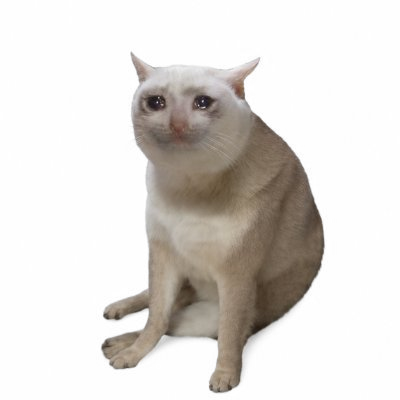
CASHCAT
The original. Front-facing. Robinhood Chain's cat.
It runs letscash.fun, where every launch quietly burns CASHCAT with the platform's cut.
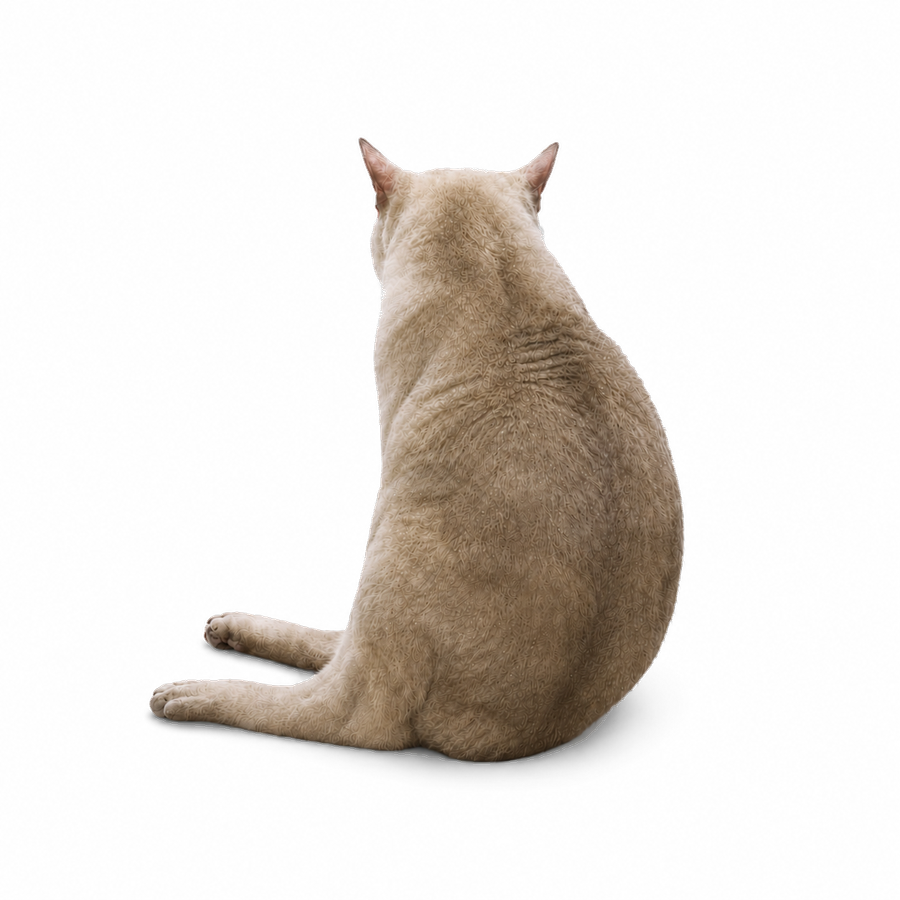
It's CASHCAT, backwards. Same cat — you're just looking at the other end. And that's the whole point: everything this token earns turns around and comes back to the people holding it.
0x01ef5c6a1cbdd8870092eeb1c9fe805c272cfecc
CASHCAT looks at you. CASHBACK looks away — because it's busy watching the fees come home.
The original. Front-facing. Robinhood Chain's cat.
It runs letscash.fun, where every launch quietly burns CASHCAT with the platform's cut.
The same cat, turned around. Launched on its own platform.
It takes the fees it earns, buys CASHCAT with them, and hands them to holders. The cash comes back.
Four steps. No treasury discretion, no multisig deciding what "back to holders" means this week.
Every swap on the Uniswap v4 pool pays the launch tax — set once at deploy, immutable after.
The hook collects tax in the pool's own asset, never in CASHBACK. 0.7% to the creator stream, 0.3% to the platform.
The claimed ETH is market-bought straight into CASHCAT on-chain. Same chain, no bridge, no OTC deal.
Hold at least 10,000 CASHBACK at the snapshot and it arrives pro-rata. You held the cat's back; the cat pays you back.
Read straight off Robinhood Chain by your own browser — not from a number we type into a database. Check it against the explorer yourself; the link is right there.
| Round | Wallets | CASHCAT | ETH claimed | Transaction |
|---|---|---|---|---|
| reading the chain… | ||||
Four addresses. Between them you can follow every ETH of fees from the pool to a holder's wallet without taking a word of this on faith.
poolConfigs and it names the fee recipient below.
poolConfigs names who the fees pay.
No staking. No claim page. No merkle proofs. The loop runs every few minutes: fees get claimed, spent on CASHCAT, and pushed straight to holders' wallets. Here is every step, including the part you have to trust.
The pool has been quietly stacking ETH since the first trade. sweep() banks it and splits platform from creator; claim() pulls the creator side out. Fees are always ETH — never CASHBACK — so nothing has to be sold to pay for any of this.
hook.sweep(poolId) → hook.claim(poolId)
The whole claimed balance market-buys CASHCAT on-chain. Not a treasury allocation, not an OTC deal, not "some of it" — the entire claim, into the open market, where the buy pressure is visible to everyone.
swap(ETH → 0x020b…18b4)
Balances are rebuilt from the token's own Transfer events at a stated block. Anyone can recompute the same list from the same chain and check it matches. Wallets holding at least 10,000 CASHBACK are in.
balances at block N, where balance ≥ 10,000
CASHCAT goes out pro-rata in one batched transaction. Nothing to stake, nothing to claim, no site to connect to. You hold CASHBACK, the tokens turn up. That's the entire user experience.
A round fires as soon as the pot is worth clearly more than the gas to deliver it — so busy hours pay out constantly and quiet ones stack up instead of burning your share on delivery. The cadence follows the volume, not a clock.
batchSend(holders, amounts) → one tx
updateCreator() — without relaunching the token.
CASHBACK launched on the 1% tier — the lowest the platform allows. A trade pays 1%, the platform keeps 0.3% of it at every tier, and the rest is the stream that feeds the loop.
Of every trade, paid in ETH to the distributor. This is the part that becomes CASHCAT for holders.
letscash.fun's slice — which itself buys and burns CASHCAT. The loop wraps around twice.
The entire supply becomes liquidity at launch. No team bag, no vesting cliff, no unlock chart.
The v4 hook rejects every liquidity-removal attempt. The rug isn't disabled — it was never installed.
Add chain ID 4663 to your wallet and bring some ETH over for gas and size.
Connect, find CASHBACK, and check the address against the one posted here.
Hold at least 10,000 and you're done. CASHCAT shows up in your wallet each round without you lifting a finger.
No. CASHBACK is a community token that launches on CASHCAT's platform and spends its fees buying CASHCAT. It's a tribute with a mechanism attached, not an official product. CASHCAT itself has no affiliation with Robinhood Markets either — the whole thing is fan fiction with tickers.
Because buying back your own token is a closed loop that mostly moves your own chart. Buying CASHCAT sends real ETH into the ecosystem this token came from, and holders end up with an asset that isn't correlated to CASHBACK's own exit liquidity.
No. Hold 10,000 CASHBACK or more and the tokens arrive on their own. No staking contract, no claim button, no approvals to sign, no site to connect your wallet to.
The 10,000 floor exists for a boring reason: sending to every wallet holding thirty tokens costs more in gas than those wallets receive, and that gas comes out of everyone else's share.
Today: publication, not code. The stream pays to a project wallet, and that wallet is what runs each round. That's the price of the simple version, and pretending otherwise would be the actual red flag.
What you can verify is every round's receipts — the claim, the buy, the snapshot block, the batch send — and the snapshot itself, which anyone can recompute from Transfer events. A skipped or short round is obvious. If it outgrows that, the stream can be handed to a locked distributor contract with updateCreator(), and the answer becomes code instead.
No. Fees are earned in ETH on Robinhood Chain and CASHCAT lives on Robinhood Chain. One chain, one transaction path, no bridge risk.
It's a memecoin about a cat facing the wrong way. Assume you can lose all of it, because you can.